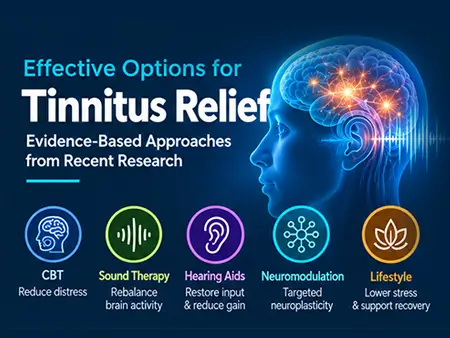
Tinnitus is that persistent ringing, buzzing, or whooshing sound that only you can hear. It hits millions of people, and for some it turns into a real daily struggle. The science these days points to a mix of ear damage, overactive brain circuits, and how stress and attention feed into it. There's still no magic switch to turn it off, but researchers have gotten clearer on which approaches ease the burden. Here's a rundown of the main options that hold up under recent studies and clinical guidelines.
Cognitive Behavioral Therapy for Managing Tinnitus Distress
CBT doesn’t try to silence the noise. Instead it works on the frustration, anxiety, and sleepless nights that make tinnitus feel louder.
- Therapists help you challenge the thoughts that spiral when the ringing kicks in.
- Large reviews keep ranking it near the top for cutting down on how much tinnitus interferes with life.
- A 2025 international trial published in Nature Communications showed solid improvements when CBT was used on its own.
- Even some app-based versions that deliver structured CBT elements have produced lasting drops in distress scores in controlled tests.
- Guidelines from both European groups and the recent VA/DoD update continue to put CBT high on the list for people whose tinnitus bothers them most.
Sound Therapy Options That Soften Tinnitus Perception
Many people get relief by adding other sounds so the tinnitus doesn’t stand out as much. This can be as simple as a white-noise machine or more tailored programs.
- Background noise, nature sounds, or specially filtered music can make the internal sound less noticeable.
- Newer techniques try to disrupt the brain’s abnormal synchrony around the tinnitus frequency rather than just covering it up.
- A 2025 Newcastle University study tested a modulated sound approach delivered through everyday devices and found a measurable quieting effect that stuck around for weeks after people stopped listening.
- Guidelines note that pairing sound enrichment with basic education usually works better than education alone.
Try our Masking Downloads Library for Tinnitus Relief
Hearing Aids That Address Both Hearing Loss and Tinnitus
If you’ve also got hearing loss—and a lot of people with tinnitus do—amplifying the outside world often helps quiet the internal noise.
- Modern hearing aids can add soft therapeutic sounds on top of amplification.
- Umbrella reviews of the evidence show consistent drops in tinnitus handicap scores when people start wearing them.
- The exact sound programs built into different brands can vary more than the labels suggest, so proper fitting matters.
- For more severe cases, cochlear implants have produced some of the biggest improvements in the data, though they’re only for people who meet strict criteria.
Bimodal Neuromodulation Devices Showing Promise for Tinnitus Relief
This approach pairs sound with mild electrical stimulation, usually on the tongue, to nudge the brain’s auditory pathways into a different pattern.
- The Lenire device, cleared by the FDA, combines customized audio with gentle pulses and has posted strong results in both clinical trials and real-world clinic data.
- Many patients with moderate or worse symptoms report clinically meaningful drops in THI scores, often within the first six to twelve weeks.
- Recent meta-analyses find these bimodal methods more reliable and longer-lasting than stimulation techniques that use only the brain or only sound.
- Treatment happens mostly at home after an initial assessment by a qualified clinician.
Combining Approaches and Everyday Adjustments
Tinnitus Retraining Therapy mixes counseling with low-level sound to encourage the brain to tune the noise out over time. A big 2025 multicenter study found that combining treatments often works better than single methods, though the gains usually come from the stronger option carrying more of the load rather than pure synergy.Simple daily habits still matter. Stress, poor sleep, and constant quiet can all turn up the volume on tinnitus. Mindfulness practices, regular movement, and cutting back on things that spike anxiety help many people keep symptoms more manageable. These aren’t cures, but they support the formal treatments.The best starting point is usually a proper evaluation with an audiologist or ENT. They can check for underlying issues and match options to your specific situation. Research keeps moving—especially around refined sound protocols and neuromodulation—so what works well today may get even better. The key is finding the mix that actually reduces how much tinnitus runs your day.
