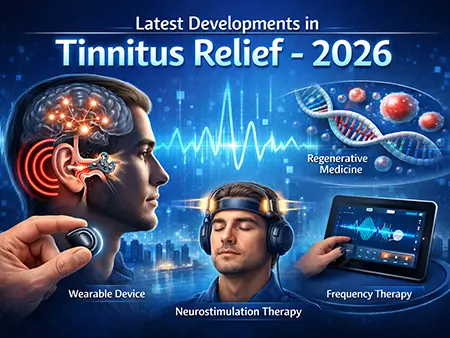
Tinnitus affects millions of people worldwide, often manifesting as a persistent ringing, buzzing, or whooshing sound in the ears with no external source. Recent estimates put the prevalence at around 15% of adults, and for those severely impacted, it can lead to sleep problems, heightened anxiety, and a noticeable drop in quality of life. While a complete cure remains elusive, early 2026 brings encouraging progress. Researchers increasingly view tinnitus as a brain-related issue rather than purely an ear problem, driving advances in neuromodulation devices, sound-based therapies, emerging medications, and improved diagnostics.
Understanding Tinnitus and Why Relief Matters
Tinnitus isn't just background noise—it's often tied to changes in how the brain processes sound after hearing damage, stress, or other triggers. This neurological perspective explains why traditional ear-focused treatments fall short for many. The good news? Multimodal strategies that target both the auditory system and brain pathways are showing real promise in reducing symptom severity and helping people regain control.
Breakthroughs in Bimodal Neuromodulation
One of the most talked-about areas is bimodal neuromodulation, which combines sound stimulation with mild electrical pulses to help retrain brain responses. The Lenire device, from Neuromod Devices, remains a leader after its FDA approval. Recent real-world studies from 2025 and into 2026 report strong outcomes—for instance, in one analysis of patients with moderate to severe tinnitus, over 80% experienced clinically meaningful improvement after 12 weeks, with reductions in handicap scores far exceeding typical thresholds. While not everyone sees the same level of benefit, and some clinicians prefer combining it with counseling for longer-term results, ongoing refinements make this approach more refined and accessible through supervised at-home use.
Advances in Sound-Based Therapies
Non-invasive sound therapies continue to evolve and remain a first-line option for many. A notable 2025 study from Newcastle University tested a modulation technique where participants listened to specially adjusted sounds for an hour daily over six weeks. It led to about a 10% drop in perceived loudness, with effects lasting roughly three weeks post-treatment. Researchers see potential for smartphone delivery, making it low-cost and widely reachable without clinic visits. Notch music therapy, already established in Europe, filters out frequencies matching the tinnitus pitch—often integrated into apps or modern hearing aids for gradual brain adaptation.
For simple audio masking, which uses external sounds to cover the internal noise, practical resources stand out. The Audioman Tinnitus Audio Masking Library offers 442 high-quality MP3 tracks, including white noise, pink noise, binaural beats, and sine waves. A built-in frequency identification tool helps users match sounds to their specific tinnitus profile, supporting better masking during work, relaxation, or sleep—all downloadable with no ongoing fees.
Emerging Pharmacological Options
Drug development is gaining momentum by targeting brain inflammation, neural repair, and related conditions like atypical migraines. Approaches combining migraine medications, anti-inflammatories, and cognitive behavioral therapy (CBT) show promise in calming overactive circuits. Candidates such as AC102 demonstrate potential in early models to restore auditory nerve function, while SPI-1005 holds FDA Breakthrough Therapy status for Ménière's-related tinnitus and hearing issues. Genetic insights into hereditary factors, particularly in certain bilateral cases, could lead to more personalized treatments down the line.
Improved Diagnostics and Objective Biomarkers
Tracking progress has historically relied on subjective reports, but 2025 research from places like Mass General Brigham identified measurable signs—such as pupil dilation and subtle facial responses during sound exposure—that reflect nervous system involvement. These low-tech biomarkers could make clinical trials and personal monitoring more objective and reliable.
Holistic and Integrated Management Approaches
Many specialists now favor comprehensive programs blending tools like apps, biometric feedback, nerve stimulation, and therapy. High success rates come from tailoring plans to individual needs. Events such as virtual summits in 2026 continue to educate on options like CBT, retraining therapy, and neuromodulation. Emerging links between tinnitus and cognitive function further emphasise brain-health strategies.
In early 2026, the outlook for tinnitus management feels more optimistic than ever. Combining technology, sound, potential drugs, and behavioural support offers varied paths to relief. Results differ by person, so consulting an audiologist or ENT specialist for a customised evaluation is still the smartest step. With research accelerating, what was once a chronic burden is increasingly becoming something many can effectively manage.
