If you've ever dealt with that constant ringing, buzzing, or whooshing in your ears that no one else can hear, you know how exhausting tinnitus can be. It disrupts sleep, makes concentrating tough, and sometimes leaves people feeling anxious or down. There's still no magic cure that wipes it out for everyone, but sound therapy has become one of the most researched and practical ways to dial down the annoyance and make daily life more manageable. I've followed this field for years, and the evidence keeps building that carefully chosen sounds, whether white noise, music, or specially tailored tones, can help many people habituate to the noise or even perceive it as less loud.
How Sound Therapy Works for Tinnitus Relief
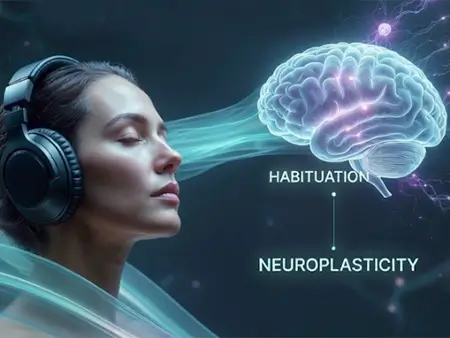
At its core, sound therapy isn't about drowning out the tinnitus completely (though masking can play a role). Instead, it taps into how the brain adapts. When hearing loss or damage cuts off normal input to parts of the auditory system, the brain sometimes turns up the gain on internal signals, creating the phantom sound. Introducing external sounds helps "retrain" neural pathways through neuroplasticity. Over time, the brain learns to pay less attention to the tinnitus signal, reducing its emotional impact. Approaches like notched music (where frequencies matching your tinnitus pitch are removed) aim to encourage lateral inhibition in the cortex, quieting overactive neurons. Other methods use modulated sounds to break up synchronized firing patterns that may drive the perception.
People usually listen for a couple of hours a day, sometimes more, with effects building gradually over weeks or months. Many combine it with counseling or hearing aids if hearing loss is involved.
Key Mechanisms Behind Tinnitus Sound Therapy
Sound therapy works through several brain-based processes. Masking raises the background noise level to make tinnitus less noticeable in quiet environments. Habituation, a big part of tinnitus retraining therapy (TRT), teaches the brain to treat the sound as unimportant. Customized sounds promote cortical reorganization, lowering central auditory gain and disrupting hypersynchrony. These changes often lead to reduced loudness and distress, with benefits sticking around when use is consistent.
Evidence from Recent Tinnitus Sound Therapy Studies
Recent studies highlight both the promise and the realistic expectations.
One exciting development comes from Newcastle University in late 2025. Researchers tested a novel cross-frequency de-correlating sound modulation in a blinded online trial with 77 chronic tinnitus patients. Participants listened one hour daily for six weeks to either the active modulated broadband sound or a sham version. The active group saw a significant drop in perceived loudness, about 10% quieter on self-ratings, and the effect lasted at least three weeks post-treatment. This approach stands out because it could eventually be delivered via smartphone apps without special equipment.
Full study details: https://www.sciencedirect.com/science/article/pii/S0378595525001534
Promising Results from Music-Based and Customized Sound Therapies
Earlier work still holds up too. A 2023 meta-analysis of music-based therapies (including notched variants) pooled data from 19 trials and over 900 patients. It found solid reductions in tinnitus questionnaires and loudness ratings, with standardized mean differences around -0.86 to -1.07 across measures. Standard music therapy often performed comparably to more complex versions, making it accessible. Link: https://pmc.ncbi.nlm.nih.gov/articles/PMC10727622/
A 2025 prospective controlled study on digital frequency customized relieving sound (DFCRS) suggested this personalized, app-delivered method as a promising noninvasive option for chronic subjective tinnitus. more info: https://www.jmir.org/2025/1/e60150
Landmark Trials in Tinnitus Retraining Therapy and Comparisons
The big TRTT trial from 2019 (still frequently cited) compared full tinnitus retraining therapy (counseling plus sound generators), partial versions, and standard care in 151 people. Everyone improved substantially over 18 months, but adding sound generators didn't outperform counseling alone in that group, suggesting the therapeutic relationship and habituation process matter a lot. Full study details: https://jamanetwork.com/journals/jamaotolaryngology/fullarticle/2734346
Limitations and Realistic Expectations for Sound Therapy
Not every study is perfect, some lack long follow-up, blinding is tricky with sounds, and results vary by tinnitus type, how long someone's had it, and consistency of use. Side effects are rare; it's generally safe. Sound therapy rarely eliminates tinnitus entirely but often lessens its burden when used consistently.
Next Steps if Tinnitus Is Affecting Your Life
If tinnitus is bothering you, seeing an audiologist or ENT for a proper check (and ruling out treatable causes) makes sense. Sound therapy often works best personalized and paired with other supports like cognitive behavioral therapy. The science isn't standing still, newer customized, app-deliverable options are exciting, but the key takeaway is consistent use and patience can lead to real relief for a lot of people. It's not about silencing the sound entirely for most, but making it fade into the background so life feels less dominated by it.
